A Time for Thankfulness

Perhaps this is a teaser:  I have another soup recipe for you and will share it….next week.  But today, I am being led in different direction.

It is no secret that the pace of a farm is hectic for most of the year.  In these final weeks before snow flies and the ground freezes, our to-do list far outweighs our available hours and  manpower.  This morning, as I was preparing for yet another high-speed day, the Voice I depend upon whispered rather loudly, “Be Thankful.”

“Hmm, ” I acknowledged.  “As usual, You are so right!  I need to stop and be thankful….how about next month?”

“Check your calendar,” He said.

A quick glance reminded me that November first was….tomorrow…which is now today.  How timely!  Was this a coincidence?  I hardly think so.

And so, I am about to begin a new adventure which I am calling, Thirty Days of Thankfulness.   If you would care to join me, I will post pictures and prose on Instagram and will share them to Facebook each day for the month of November.  If you don’t follow Love Led Farm on Instagram yet, consider this your invitation to do so or invite someone who would also enjoy these posts.  And if you would really like to participate, why not add your own thoughts of thankfulness?

Joyful hearts begin with thankful hearts.  Let’s all take a break from Life to be grateful for the limitless blessings that we enjoy each day.

Soup Week

We arrived home from a relaxing vacation to discover that the thermostat on our enormous upright freezer had stopped working.  This is the freezer into which I had been faithfully stocking this summer’s fruits, vegetables, and yes, meat—lots of meat.  Thankfully, almost everything was still frozen.  And we had purchased a chest freezer this summer in which to store chickens for customers.  So until the repairman could visit,  David and I worked in tag team fashion, stuffing both the chest freezer and the kitchen freezer with everything that would possibly fit.

However…

Throughout the year, I had accumulated a nice collection of bones and bits of leftover meat from chickens, hams, and even a turkey.  The idea was that when the cold weather returned, I could use these nuggets of frozen inspiration to fill the house each week with the fragrance of warm bone broths and soups. Now, without even an extra inch in which to store them, I turned to Plan B.

“Why not spend a week making the soups now?” I thought. “By freezing them in meal-size portions, one dinner each week will be a simple matter of heat and serve.  Plus, what a great way to have a stockpile of soups ready to share with others at any time.”

And so this week has been all about soup.  Through the chilly months to come, I will gladly share with you from the collection of recipes I have accumulated over the years.  Each will feature meat that we raise on Love Led Farm.  Each has been tested and approved by Critic Number One–my husband.  And, with each recipe I will share some tips for making it easier and healthier.

So, grab your cutting boards and soup pots.  It’s time to make soup!
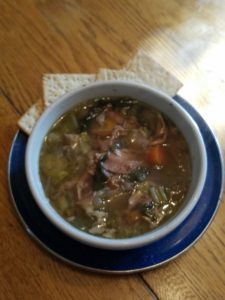
Today, let’s start with Basic Chicken Soup.   Uncomplicated, soothing to the body, and so good for you–it’s comfort in a bowl.

Chicken Soup with Vegetables and Noodles

What to Put In It:

The bones and meat from a roasted chicken

2 large stalks of celery, rough chopped

1 medium onion, rough chopped

2 or 3 medium sized carrots, sliced

2 tsp. minced garlic

1 tsp. thyme

1 tablespoon salt (you can reduce this if your chicken was already heavily seasoned)

1/2 tsp. pepper

water to cover–6 to 8 cups

1 large package of frozen mixed vegetables or 4 cups of fresh, chopped vegetables

2-4 cups of uncooked noodles (depending on how “noodly’ you like your soup.)

How to Make It:

Load the chicken, celery, onion, and carrots into your stock pot.  Sprinkle the garlic, thyme, salt, and pepper on top and cover with water.

Bring the liquid to a boil and then cover and simmer for until the meat falls off of the bones–1 or 2 hours.  Turn off the heat and allow the soup base to cool.  Pull the meat off of the bones.  The bones get discarded; the meat goes back into the pot.  Add the remaining vegetables.  Bring the soup back to a boil, and then lower to a simmer until the vegetables are tender.  Add the noodles 10-15 minutes before serving.

Terrific Tips

*Making Broth.  Since chicken broth is a basic ingredient for a lot of other soups and casseroles, I always keep several jars in the freeze. Instead of finishing the soup, I strain the liquid and discard the meat and vegetables.  Then, I cool the broth in the refrigerator so I can skim off the fat before transferring the golden liquid to freezer containers.

*Use Your Crockpot.  It’s so easy!  After we have enjoyed one of “Robin’s Roasted Chickens,”  I transfer the bones and juices right into my largest the crockpot.  I add the onion, celery, carrots, seasonings, and water, and let it cook overnight.   On soup day, simply add the rest of the vegetables and cook it on low during the day, adding the noodles towards the end.

*Instead of Noodles, Try Zoodles.  We like to add vegetables wherever possible.  So instead of noodles in our soup, I make zoodles.  I use 1 large zucchini and my spiralizer to create mine but they are also available in the frozen vegetable section of your store.  Some people like to salt and drain them before adding them but for soup, I have not found this necessary.  Just add them to the simmering soup about 10 minutes before serving so the zoodles can cook thoroughly, and since they tend to get mushy, don’t overcook them.

Soup season is here!  It’s time to stir up something warm and wonderful for your family.  What will be in your soup pot this week?

 

The Chickens Have Flown

Just as summer has quickly drawn to a close, our summer meat birds sales have quickly ended.  Hopefully, you have tucked a few of them into your freezer for the months ahead.

Now it’s time to start thinking of ways to use that delicious meat.  Since our hot summer is finally cooling into a more comfortable fall, let’s turn on our ovens.  Roasted chicken and one-pot meals are great for both family and friends.  A few months ago, we talked about how to roast the perfect chicken (See, “Robin’s Roasted Chicken”).  Now let’s start learning how to use the leftovers.

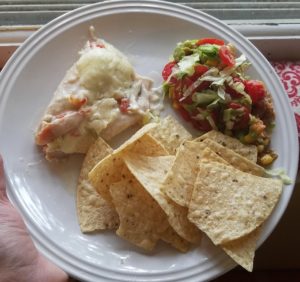
My husband loves Mexican food–the hotter the better.  I prefer a milder meal.  My Chicken Enchiladas are a dish we can both agree on–enough heat for his spicy palate, but plenty of cheesy chicken for me.   Try them and see what you think.

Chicken Enchiladas

The Ingredients

1 medium chopped onion

1 tsp. minced garlic

3 tablespoons of chicken broth

1 tablespoon flour

1 tablespoon cornstarch

4 oz. can of chopped green chilies

14 oz. of chicken broth

2 cups cooked, shredded chicken

10 oz. can of diced tomatoes with chilies

2 cups shredded mozzarella, divided

2 cups of sour cream

10 flour tortillas

In a saucepan, soften the onion and garlic in 3 tablespoons of chicken broth.  Add flour, cornstarch, green chilies, and 14 oz. chicken broth.  Cook over medium heat, stirring frequently, until thickened and bubbly.  Add the chicken, and remove from the heat.

In a large bowl, combine 1 cup of mozzarella, the tomatoes with chilies, and the sour cream.  Now add the chicken mixture and mix thoroughly.  This will be the filling for your enchiladas.

Spoon some filling into each tortilla and place seam side down in a lightly oiled baking dish.  Pour any remaining sauce over the tortillas and sprinkle the second cup of cheese on top.

Bake at 350 degrees for 20-30 minutes.

To make this Mexican comfort food a bit healthier, I use arrowroot instead of cornstarch and I substitute plain, goat milk yogurt for the sour cream.  I have also found tortillas that are lower in carbs and even some that are gluten free.

This recipe makes enough bubbly goodness to easily please 8 – 10 people.  Serve it with chips, salsa, and a bit of salad for a fiesta of flavor.


Making Cheese

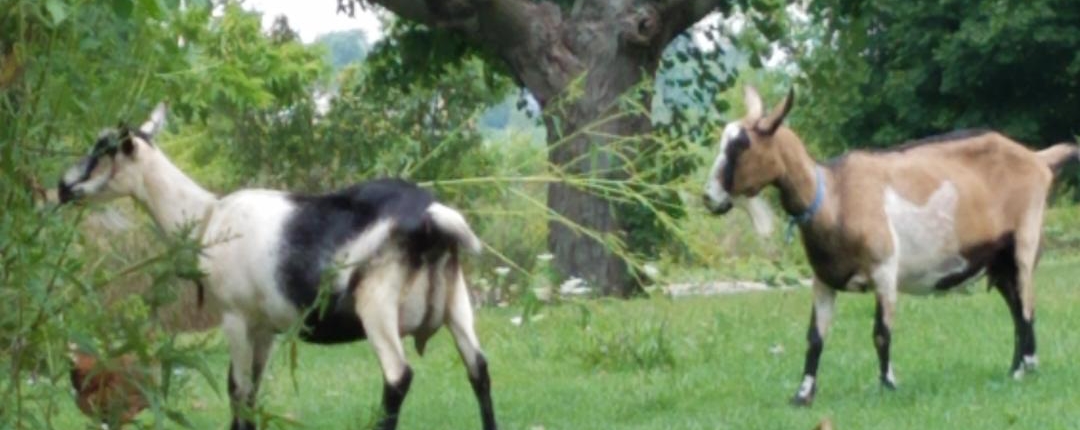
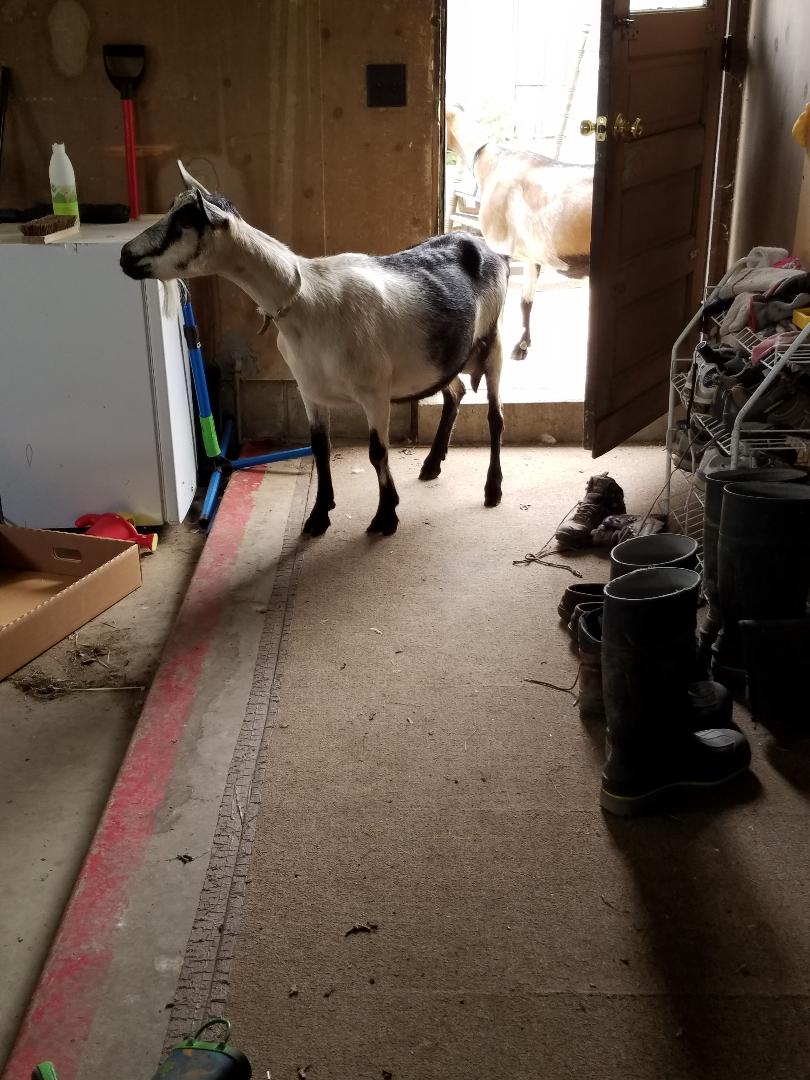
Our dynamic duo, Holly and Edith, have been producing gallons of sweet, refreshing milk for us this summer.  Thanks to them, we have more than enough to satisfy our own needs and those of our herd share participants.   And so I have been practicing my culturing and cheese making skills.  Buttermilk, yogurt, several flavors of Chevre’, and jars of Feta with kalamata olives now fill our extra refrigerator and freezer in anticipation of the dry months when the does’ bodies need to rest.

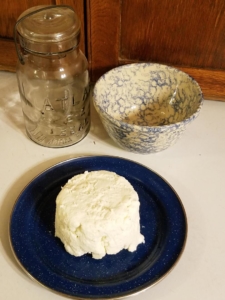
Recently, I discovered a new cheese to try.  Some call it Paneer, some spell it Panier.  Either way, you’ll find it typically in Indian and Mexican recipes.  Paneer is a bland, almost flavorless cheese that can be used as a protein substitute for meat.  With the consistency and properties of tofu, this cheese adds a nutritious boost to many dishes while absorbing the flavors of sauces and other ingredients.

And guess what?  No soy! It’s made of easy-to-digest goat milk.

Do you have a vegetarian friend or family member?  Use this as a meat substitute in their chili or spaghetti sauce.  Add it to tacos or curry for an easy, meatless protein.  I recently used Paneer in lamb meatballs which baked in a fragrant, curry sauce.  Delicious!

Paneer is easy to make and can be adapted to whatever amount of milk you have on hand.  It calls for two ingredients:  milk and white vinegar.  That’s it!

Now, here’s how to make it:

The Equipment:  a heavy bottom pan (I like a double boiler), a thermometer,  food grade cheese cloth, and a cullender or strainer

The Ingredients:  1/4 cup of white vinegar for each  gallon of milk that you are using, and of course, raw milk.  Although I haven’t tried it, I am sure you could also reduce the vinegar for smaller amounts of milk.

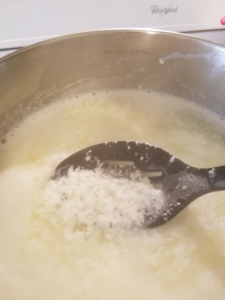
Gradually heat the milk to 185 degrees, stirring frequently so it won’t scorch on the bottom of your pan.  Hold that temperature for 10 minutes–using a double boiler makes this easy.  Then pour in the vinegar and stir thoroughly.  The milk will begin curdling and coagulating almost immediately.  Let it sit for 30-40 minutes or until it cools.

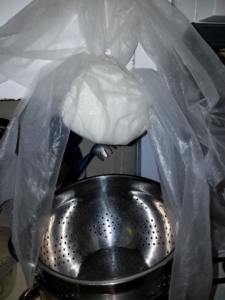
Set the cullender over a large bowl or pan and line it with a double layer of cheese cloth.  Then carefully pour the milk/cheese curds through the cheese cloth.  Now tie the ends together to form a bag and allow the cheese to drain for at least 12 hours. As you can see, I hang mine from the knob of a kitchen cabinet.

When the whey has drained off, the cheese can be sliced, cut into cubes, or crumbled.  I divide mine into 1 pound portions to freeze for winter, making it easy to substitute for a pound of meat.

And now it is time for your imagination.  How could you use Paneer?  Smoothies?  Stir fry?  In a soup?  Why not!

As far as the goat milk to make it with…we still have herd shares available through December/January.  Contact me if you are interested in cold, fresh milk for your family.


Meeting the Challenge

The word that summarizes our 2018 farm year is:  Challenge.
If it breaths, it has been affected by the cold, wet spring (did we even have spring?) and the hot, dry summer.  A lamb died of pneumonia.  Two beloved mama goats and all of the babies had to be removed because of parasites that lingered in the wet dirt of our barn floor.  Our chicken processor–the one who lived only 2 miles away–retired.  The meat birds failed to thrive as quickly as they should have.

And then there were the laying hens who simply decided that it was too hot to produce eggs…at least in any spot that we could possibly find.  Several of these beauties decided that the other side of the road was worth crossing (we aren’t sure why) and irritated the locals on a daily basis.  One kind lady called the farm because she was worried.  I assured her, “It’s okay…hit the chicken.”

Am I complaining?  Certainly not. I share these experiences with you for two reasons.

First, we chose to farm for the challenges knowing that meeting each would teach us something.  In every case, we have learned, adapted and have made changes that will improve Love Led Farm for years to come.

We have plans for a larger flock of lambs next year.  We added two beautiful registered dairy does this year and will raise a stronger, healthier herd of goats with them  We have found another hatchery for our meat birds and are working with a new chicken processor–helping him launch his new mobile unit.  And those free ranging hens will soon find that their world doesn’t include the other side of the road.

The second reason I share all of this with you is to give you a glimpse of “real” farming.  Real farmers produce delicious food.  Real farmers also get tired, dirty, and disappointed.  Victories come after more than a few setbacks.  But this is Life–the one that real farmers have chosen, accepted, and love.

If you want to see a “real” farm, why not call us for a visit and a tour?  We enjoy sharing what we have learned.

And if you would like to purchase some of the most delicious chicken you’ve ever tasted, be sure to place your order…our last 2018 flock will be butchered in September.  You are going to want some for your freezer.

The Special Sauce

We were young, in graduate school, and barely scraping by.  So when an older couple invited us for supper, we eagerly accepted.

On the menu was barbecued chicken, but with a sauce unlike any I had ever tasted before or after.  Our hostess graciously shared the recipe–a gift more appreciated than even that delicious meal.  It quickly became my own special sauce.

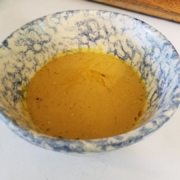
Tangy Mustard Barbecue Sauce has a refreshingly unique flavor with just the right touch of heat.  “You should bottle and sell this stuff,” is a comment I often hear.  Maybe in another lifetime, but for today, let’s just start the grill!

This recipe will make enough sauce for at least a full chicken.  Double the recipe and you’ll have enough for dipping and for leftovers.

Mustard Barbecue Sauce

1 Stick of butter

6 Tablespoons of yellow mustard

3 Tablespoons of Worcestershire Sauce

2 Tablespoons of Apple Cider Vinegar

1 Tablespoon of Sugar (You could substitute honey or an alternative sweetener)

A liberal dash of red hot sauce, adjusting to taste

Melt the butter in a small sauce pan over low heat.  Add the remaining ingredients, stirring carefully.  Bring to a boil; reduce the heat; and simmer for  a minute or two.

When I grill my chicken, I wait until the last 15 minutes to brush on this sauce.  I have also used this on roasted chicken, adding it about 30 minutes before the end of my cooking time. 

And now that you have my recipe, what will you put it on?  Better hurry up!  Chicken Pick-up Days are almost here.  Have you ordered enough for your freezer?


Allow Me to Introduce You!

Goat milking season normally begins in early May on Love Led Farm. 

This year, we weathered a bumpy beginning and our existing herd share customers patiently endured an unexpected delay with us.

Now, after retiring one beloved doe and adding two beautiful new milkers, we are enjoying our reward:  cold, sweet, delicious goat milk.  And who are the gals who are providing this delicious treat?  I thought you’d never ask!

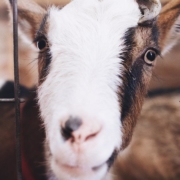
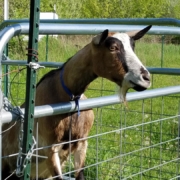
This is Junie was named at birth by our granddaughter, Eisley June.  Now, at two years old, Junie is the proud new mama of twins.

Next is Edith, a newcomer to Love Led Farm.  She is four years old, is a proven milker, and has a sweet personality. 

And finally, this beautiful girl is two-year-old Holly.  She is also settling in nicely at her new home and is trying her hardest to get used to this crazy new routine called, milking.

Why am I taking the time to introduce you to goats?

Because at Love Led Farm, we do things a little differently.  We believe that whether you buy eggs, order chicken for your freezer, or become a herd share customer, you become part of our farm family.  And in our family, honesty, integrity, and transparency are values we practice.

Are we experiencing a delay or a disappointment?  We will contact you with a full explanation and a solution.  Is there a problem with your purchase?  We will make it right.  Do you have a question or a concern?  We will work with you to find the answer you are looking for.

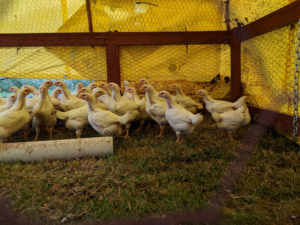
So stop by and take a look at the mobile pens filled with your chickens.  Ask to see where the hens lay your eggs.  And, yes, talk to your goats who provide your milk.

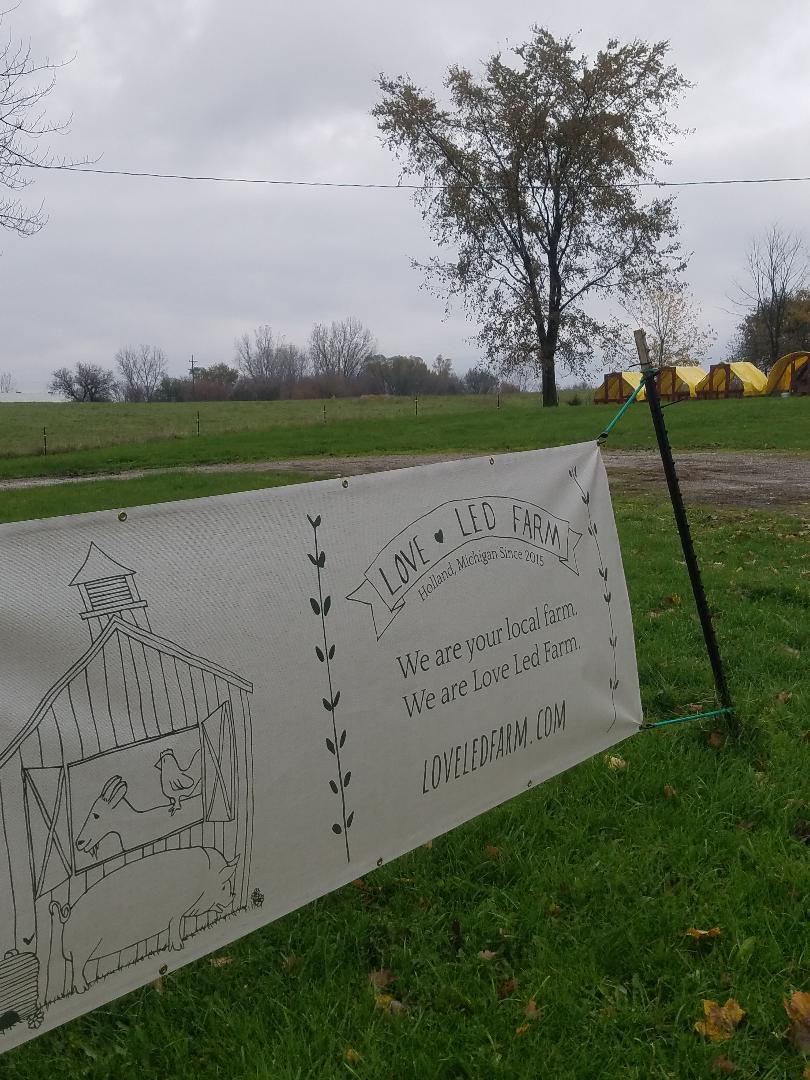
We love being your farmers and friends.  We are Love Led Farm.

Notes to Remember:

  • The first chicken Pick Up Day is July 1st.  Have you placed your order yet?
  • Not sure if you like goat milk?  Contact me and ask to try a sample.  We still have room for a couple of herd share customers.


Chicken Salad with a Kick

Boring food?  Not in this house!  David and I are foodies who enjoy a wide variety of colors, textures, and flavors.

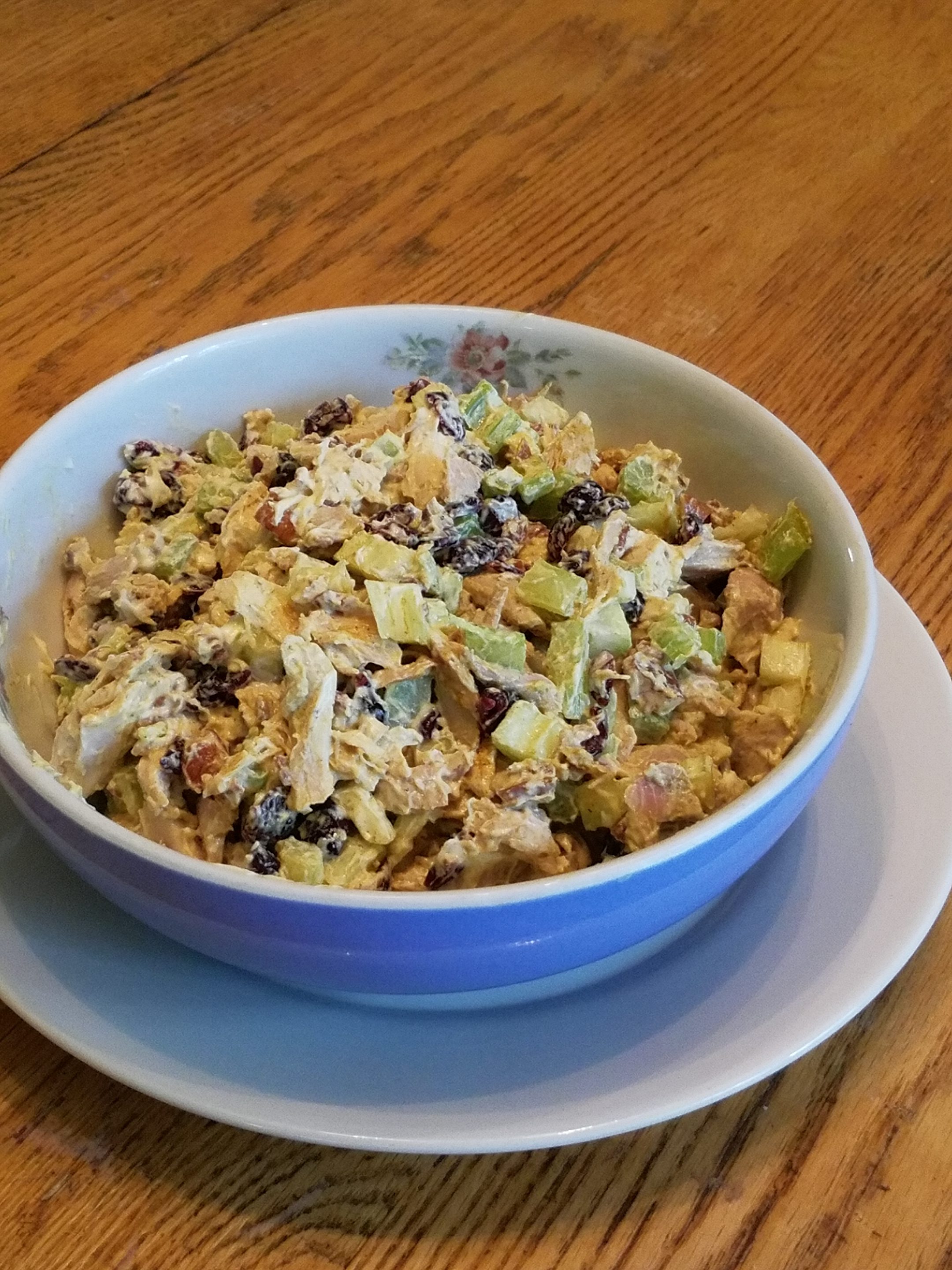
At our house, Wednesday nights in the summer are salad nights, so I wanted to make a chicken salad.  I was looking for one with excitement–some zip and zing.  Curried Chicken Salad fits that description perfectly.  It has flavor, crunch, a hint of sweetness, and is just the thing for a warm spring or summer evening.

I served ours on beds of dark, mixed greens, but this would also make a nice sandwich filling or would be great on crackers.  An added bonus:  the longer this sits the more the flavors meld together which makes for some pretty delicious leftovers.  Here’s the recipe.

Curried Chicken Salad

4 cups of cooked chicken

1T curry powder–adjust to taste

1 cup of raisins or dried cranberries.  David isn’t a fan of raisins, so I used the cranberries.  He loved them.

2 cups of chopped celery

1 cup pecans or almonds, rough chopped–I toasted my pecans in the oven for 10 minutes at 350 degrees to give them extra crunch

1 cup mayonnaise

Put the chicken in a large bowl and add the curry powder, stirring to coat.  Next, add the cranberries and finally, the rest of the ingredients.  Stir to incorporate.

Chill or serve at room temperature.

Yield:  6-8 generous servings

Now I need to tell you about my OOPS! 

The first time I made this, I took some leftover salad to work for lunch and mindless stuck it in the microwave.  Groaning, I thought, “Well, why not give it a try anyway?”  It was delicious–kind of like a curried chicken casserole.  I guess accidents can lead to some great inventions.

I think, however, as a casserole, it needs a little more curry powder.

And now, the news you have all been waiting for:  the chickens are coming!

Our pick up dates have been adjusted for this year.   Feel free to go ahead and order.  In my next post, I will give more details, but if you have questions, give me a call or send an email.

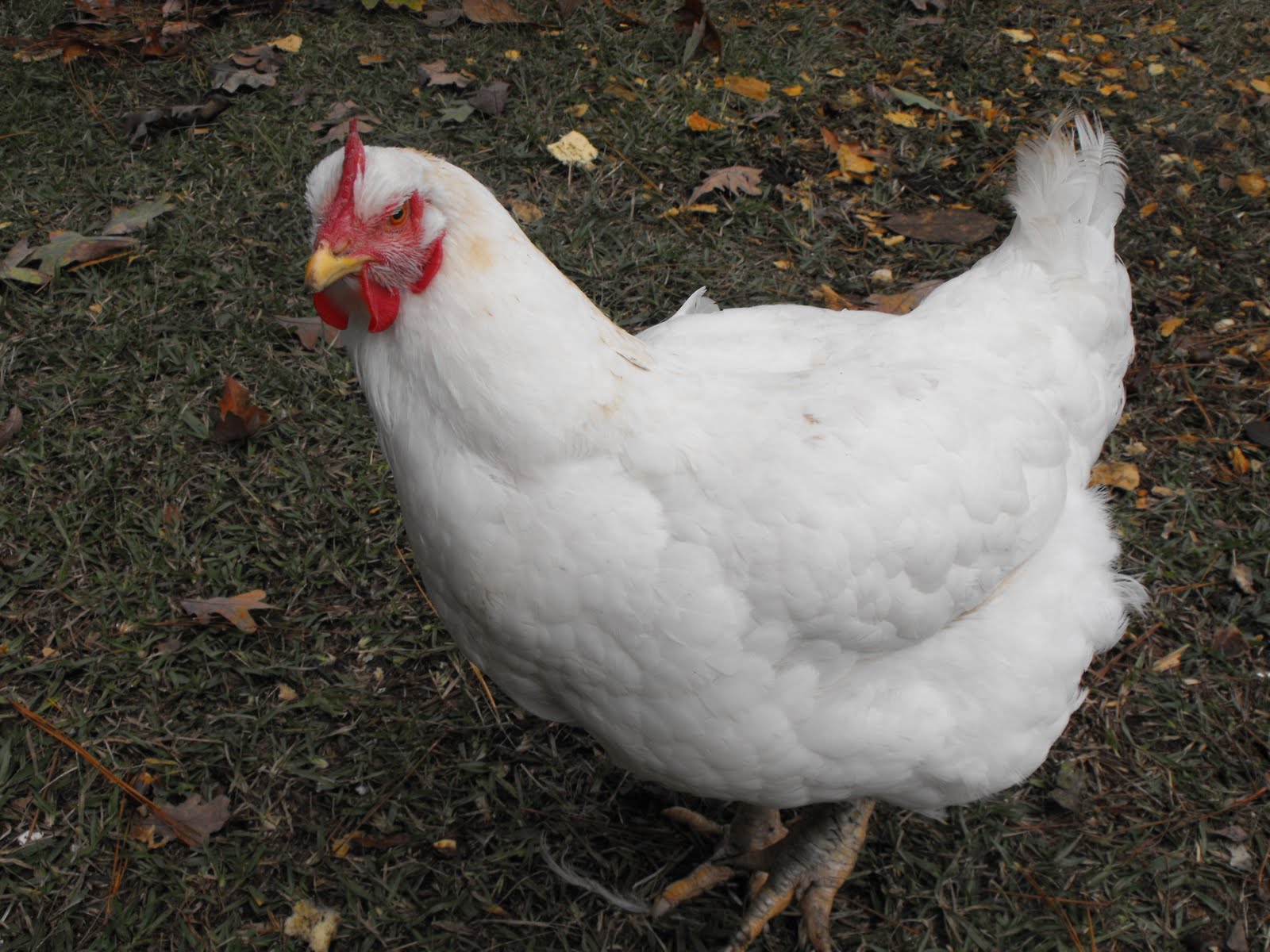
Are you ready for fresh, pastured chicken??


Goat Milk? Who Drinks That Stuff?

Read more

Honesty You Can Trust

Congratulations!  You have made the commitment to choose a healthier diet for yourself and your family.  And now the search for real food begins.

How confusing!

As you shop, you are bombarded with words like, “all natural,” “organic,” and “whole grain.”  Yet in the news you hear stories of large companies who, for the sake of the dollar, have used these labels in compromising ways.  Yes, it’s all natural and whole grain–but it is loaded with sugar and questionable oils.  Yes, the grain was raised organically in its native country, but it was sprayed for potential insects upon reaching the US port.

So who can you trust?

As a student of American history, I remember reading about the HJ Heinz Company, founded in the late 1800’s.  At a time when all sorts of nasty things were being thrown into tin-canned foods, Henry J Heinz insisted that his products be sold in clear glass jars so that buyers could see everything that was inside.  This held his company to a superior standard of accountability while creating a trusted bond between the producer and his customers.

I love this philosophy!

As you search for real food answers for your family’s needs, who better to help than local farmers who share your belief that healthy food should be produced with integrity?

Where do you find these farmers?  Farmers’ markets, farm stands, and food directories like Local Harvest and Farm Fresh are great places to start.

When you talk with these farmers, don’t be afraid to ask questions.  Are they quick to respond with honest answers?  Are you allowed to visit their farm? Are they willing to listen to your needs and help you find solutions?  Can you see yourself building a working relationship with them?

When it comes to improving your health, what could be more important than the food you eat?  You have made the choice to use pure, honest ingredients.  Find a local farmer who will be purely honest with you.

Call or email to begin your conversation with us.  We will answer your questions, arrange your personal tour, and help you with your order.  We love what we do.  We love being your farmer.  We are Love Led Farm.