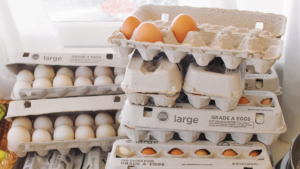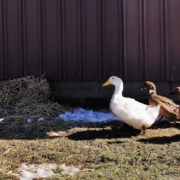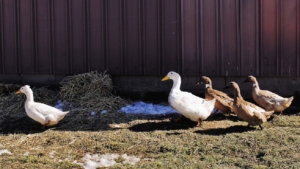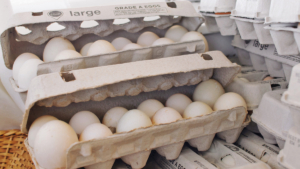
Goose Eggs: An Adventure in Eating

Georgia, Cucumber, and Pickle

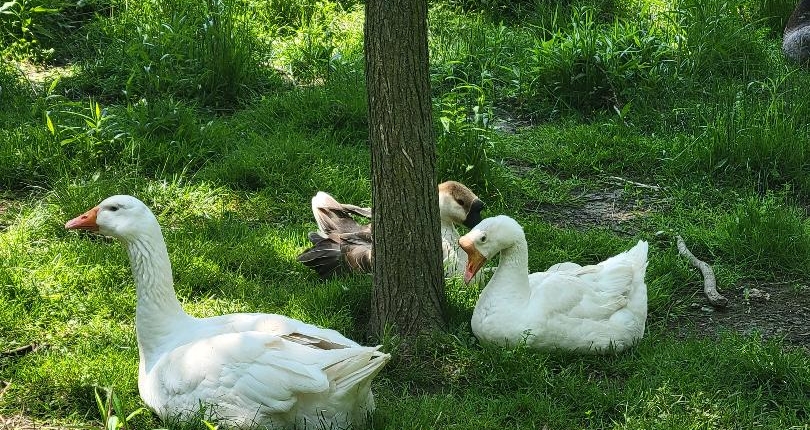
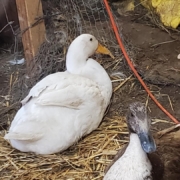
A few years ago, my grandson began his campaign to add a goose to our growing menagerie.  My hesitation centered around visions of customers being chased back to their cars by territorial birds.  When Oliver pled for me to save a gentle giant who was temporarily living at Grandpa Schoenborn’s farm, I knew I had been beaten.  I mean, how does “Ma” say no to that?  George arrived at Love Led Farm.

Imagine my surprise when George began building a nest and laying eggs!  Quickly and conveniently, we changed her name to Georgia.  She really is a nice gal, but goose eggs?

A year or two later, I was told of two more female geese who were available.  Living at the Critter Barn, they were driving the staff and visitors crazy with their noise.  Cucumber and Pickle (also females) became members of our Goose Guardian Patrol.  In charge of varmint control, the three girlfriends roam freely in and behind the barn away from customers.   My added bonus?  More goose eggs!
Geese are seasonal layers.  From February thru May, they produce eggs that are easily the size or 2 or 3 chicken eggs. With a minimum of 40 eggs apiece, that became a lot of “What do I do with these”?  It was time for some research and kitchen trials.

First, I found out that goose eggs are highly nutritious.  High in protein (12-14 g), they contain all the essential amino acids needed for good health.  Their fat (13-20g) is high in Omega 3’s; they are low in carbs (1-1.5 g); rich in B vitamins (especially B12); and high in Vitamins A, D, and E.  They are packed with minerals:  chlorine, selenium, iron, potassium, and phosphorus.  They provide trace minerals like zinc, copper and magnesium.   Sounds like a health-lover’s powerhouse, right?

The cautions have to do with their high cholesterol (over 800 mg) so you might not want to eat a whole one every day.  Also, goose eggs should be cooked to a temperature of 160 degrees or higher, so they are not suitable for dishes or dressings calling for raw egg yolks.

So, what do you do with a goose egg?
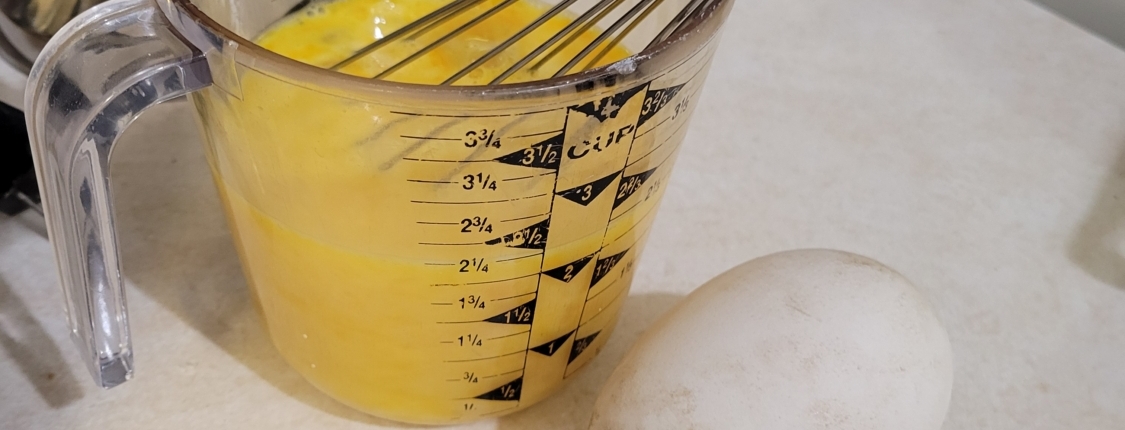
One whisked egg
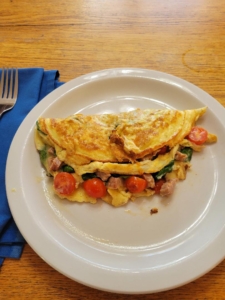
 

Here are a few suggestions.

  • Make an Omelet.  As I said, one egg is equivalent to 2-3 chicken eggs.  Fill it with spicier ingredients like sausage, cheddar cheese, peppers, spinach, tomatoes, etc.  and you will have a nutritious meal big enough for 1 or 2 people.
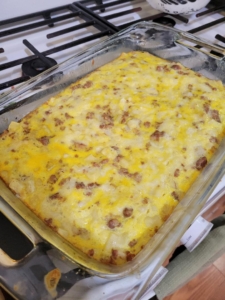
  • Make an Egg Casserole.  I use 3 well-scrambled eggs to make a dish large enough to last for several days.  Easily reheated in the microwave, a slice satisfies my husband from morning until noon.  Again, you will want to add ingredients that contribute zesty flavors.
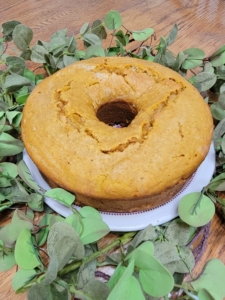
  • Try baked goods that beg for richness and structure.  Last week, I made pumpkin bread.  My recipe called for 4 chicken eggs, so I used 1 goose egg and 1 chicken egg.  The bread was dense, and moist; the flavor was delicious.  I plan to make more for the freezer. I did learn to whisk my goose egg thoroughly before adding it to the batter.  This avoids the stronger “eggy” taste of goose eggs.
  • Make pasta or gnocchi.   Cooks prize goose eggs as star ingredients in rich, golden pastas.  This is my next test trial–I’ll post my results.
  • Make Custard.  I haven’t tried this, but I’m told that goose egg custard is delicious.

By searching, “Cooking with Goose Eggs,” I found several excellent sites with tips and recipes.  It turns out that cooking with goose eggs isn’t as strange as it seems.

Are you ready to experiment?  For the remainder of March, I will be happy to give you a free goose egg just for fun.  Then, if you want more, I’ll sell them by the egg.  Check our shop or website for pricing, and remember, these are seasonal–available until mid-May.

If you try one, let me know of your results.  It is fun to hear of your cooking adventures using our products.

As always, feel free to contact me for questions, comments, and suggestions.  Supporting local small farms like ours are journeys that we make together, even when trying goose eggs.

See you again soon, on Love Led Farm.

Now, About Duck Eggs…

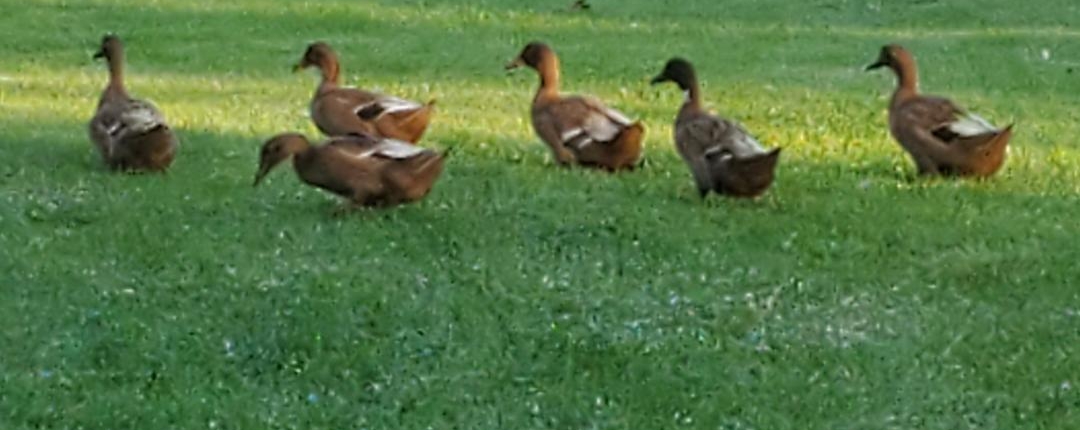
Sometimes I wonder why I bother with ducks.  Usually, this happens in mid-summer while I am trudging through tall, scratchy weeds searching for the last illusive egg that will fill an order.  Then the duck parade comes marching by or I am surprised by a hidden nest that contains a full dozen.  And I remember:  the ducks do earn their keep.

Our free-range ducks are in charge of garden/pasture clean-up.  They aerate and fertilize the soil while snacking on their favorite foods which include ticks, mosquitoes, fly larvae, and leafy weeds.  And yes, the ladies of their herd lay delicious eggs.

Who wants to eat duck eggs, though?

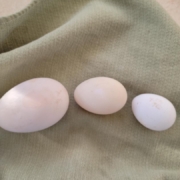
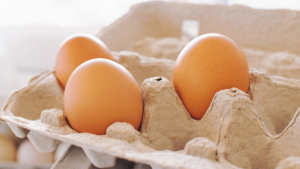
Goose, duck, and chicken eggs.

As it turns out, many people do and for good reasons.  A difference in their protein structure means that folks who are allergic to chicken eggs can often eat duck eggs.  Just imagine–eggs are back on their menu.

Avid bakers treasure them because batters are richer; cakes and cookies have more loft.  Duck eggs also make delicious pasta.

Duck eggs have larger yolks and less albumen.

Now that we have been eating them for several years, I can honestly say that neither David nor I can taste the difference between chicken and duck eggs.  I will say that due to their size and higher protein, a duck egg in the morning will satisfy your hunger far longer than a chicken egg.

Interested in more detailed information?  Check out this duck/chicken egg comparison published by Mother Earth News a few years ago:  https://www.motherearthnews.com/real-food/the-proscons-of-eating-duck-eggs-vs-chicken-eggs-zbcz1705

Here are a few tips I have learned about cooking with duck eggs:

  • A duck egg is roughly the same size as 1 1/2 chicken eggs.  When substituting in a recipe that calls for 2 eggs for example, I use 2 smaller duck eggs or 1 large duck egg.
  • Duck eggs don’t have as much moisture which can result in a drier batter, so I just adjust my liquids.
  • Duck eggs are excellent as is when scrambled.  For fried eggs, try adding a bit of water and a lid to your pan to allow for steaming.
  • Duck eggs can be boiled.   For soft-boiled eggs, allow 7-9 minutes; medium would be 10-12 minutes; hard-boiled should be 12-15 minutes.
  • Because their shell is so much thicker, duck eggs will remain fresh longer than chicken eggs–up to 2 months in the refrigerator.

As with our chicken eggs, Love Led Farm duck eggs are in hot demand.  The best way to acquire yours is to order ahead.  A text, an e-mail, or messaging works best.  I will be happy to supply your duck egg needs.

Happiness is a muddy pond.

Now that we’ve spent 2 weeks talking about chicken and duck eggs, are you ready for a new adventure?  Next week, let’s talk about goose eggs.  See you then, on Love Led Farm.

Simply an Egg?

Young mom, I have been where you are–looking at a farmer’s organic eggs and trying to justify the price.   Maybe you’ll just stick with the grocery store.  After all, they are just eggs.

Empty nester, I have been where you are. You have a little more wiggle room your budget these days. But is the price of local pastured chicken actually worth it? After all, it’s just chicken.

Seniors, I am now in your shoes. A fixed income means trying to decide where to cut your spending. Can you really afford that einkorn sourdough bread? After all, it’s just a loaf of bread.

Through the years, David and I have dedicated ourselves to learning about the relationship between nutrition and the body. We consider basic foods such as eggs, dairy, meat, grains, and produce to be the fundamental building blocks of health.  On which item shall we compromise?

Take for example, those eggs. You cook two for breakfast; add a couple to your tuna salad; and follow the cake recipe by adding three more. Now they aren’t “just eggs.” They are either contributing vital nutrients or depleting the body of its ability to function properly.

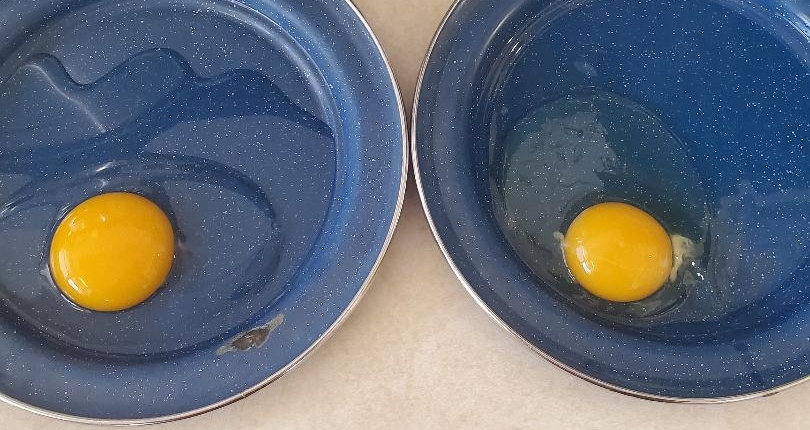
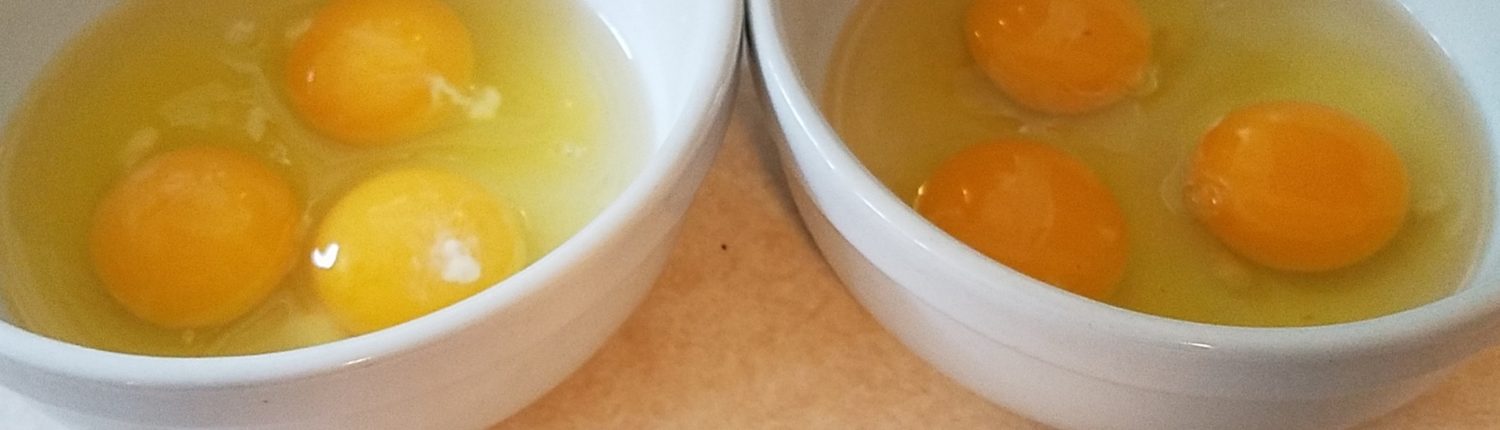
Which are our eggs, and which came from a store? Hint: look at those yolks.

By refusing to compromise on food basics, far more than your food budget is affected. Your family seems healthier–fewer trips to the doctor. You have more energy–a walk in the evening is preferable to sitting in front of the television. The food you prepare is satisfying and just tastes better–family and friends compliment your cooking.

And standing there, it dawns on you. Because basic food choices are so important, maybe cheaper eggs aren’t such a bargain after all. Perhaps bargains should be left to the toilet paper aisle.

We sell non-gmo, free-range chicken eggs.  The temptation to compromise on feed has been real–especially this winter when road conditions to the mill were awful.  After all, it’s only feed, right?  I ask myself though, if basic ingredients are the building blocks for nutrition, am I willing to sacrifice the health of my hens and ultimately, the health my body?

Healthy hens mean healthy eggs

At Love Led Farm, we are committed to offering real food that is truly good for you, provided with honest integrity, and without compromise.

Thanks to you, our chicken eggs are in hot demand.  Email, text, or leave a message on my phone, and together we will arrange a pick-up day that works.

And if you are willing to consider duck eggs, well, hang on.  Next week, let’s talk about them.

See you soon!


It Started with Chickens

Many years ago, I was inspired by friends who already had chickens and began planning my own flock.

David, being an intellectual sort of guy, studied until he had found the right housing design.  The coop was perfect after we hitched one corner to the back of our minivan and pulled it square.  The gate built for their fenced-in yard was a masterpiece.

We moved the chickens into their Taj Mahal and quickly learned something:  chickens can fly!  Right over the top of their beautiful fence and gate and into the surrounding woods.  Being responsible folks, we began a nightly ritual–the chicken round up.  Our family, including 3 little girls and a dog, would fan out through the woods, chasing the birds back to their home.

We’ve learned a few other things since then.

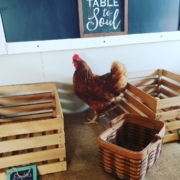
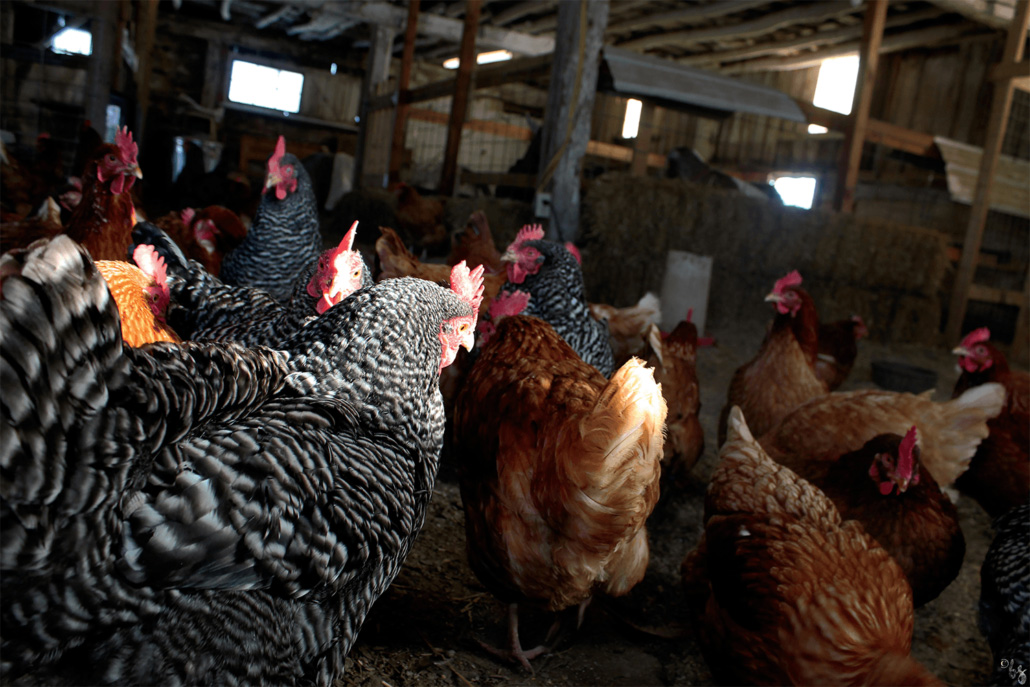
Guess what?  Chickens come home at night on their own.  They don’t need to live in a palace.  In fact, they will live and lay their eggs pretty much wherever they choose.  You could say, they rule the roost.

Since then, I have learned far more important things such as how to keep poultry in excellent condition and how that translates into heathy, nutritious eggs.

This year, I will focus much of my attention on these feathered friends, the heroes of Love Led Farm.   Over the next few weeks, I’ll reintroduce you to the humble egg and to the girls who bring provide them.

Join me as we return to the basics of eggs.  Next week, we’ll start with chickens.

See you soon, on Love Led Farm.


A Mid-Summer Update

Why does summer fly by so quickly?  Probably because there is so much to do!  Who has time to read a long post?  Not me!  So here’s a quick update on what is happening on Love Led Farm, and more importantly, what is available for you.

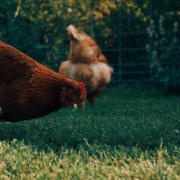
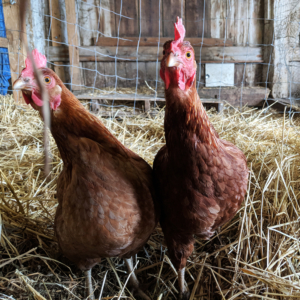
A few of the girls

Eggs–Duck and Chicken

Although I am starting to see signs of the annual Summer Slowdown, we still have quite a few eggs each day–so far.  And because the girls eat so much of their summer diet by free ranging, I don’t see any reason to raise the prices–that’s good news for all of us!

Ducks on Bug Patrol

Meat Chickens

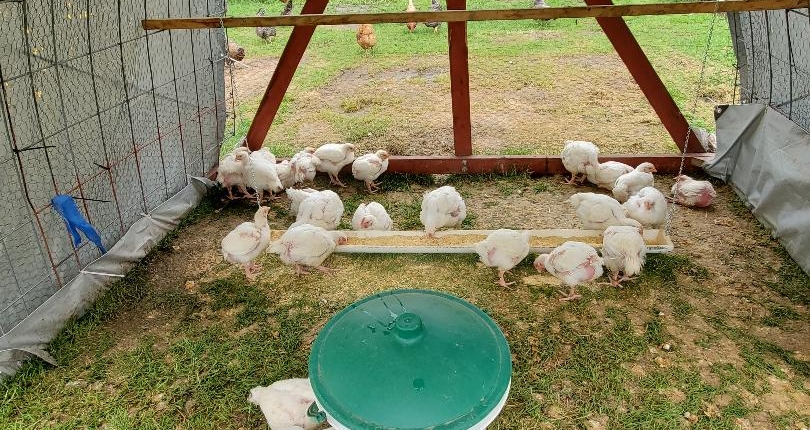
Although the July 8th flock of Cornish Cross is sold out, I still have plenty left for July 29 and September 16.  There are still plenty of Rangers available for both pick-up dates, too.

If you are wondering what on earth I am talking about, head to our home page and click on the white meat bird for information on what we offer and when.  Then choose your pick-up date(s) and pay your deposit.

But better do so soon as I have a feeling the remaining birds will quickly fly into somebody else’s freezer.

Chicken Enchiladas–one of the endless ways to use our mouth-watering chicken.

Our Pork

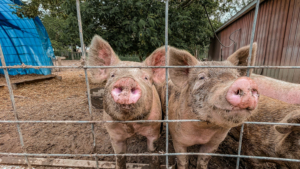
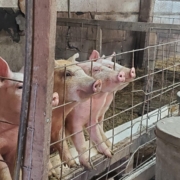
Wow, these pigs look good!  It’s probably their healthy diet which includes goat milk and extra duck eggs.  Like our chickens, folks who have previously purchased our pork are quickly claiming these for their freezers.

The good news is that we still have a little left.  We sell hogs by the whole, half and quarter.  With Byron Center Meat’s help, we craft a pork package that is exactly as you desire.

Meat shortage?  Not you!  Imagine roasts, chops, ribs, bacon, and an assortment of sausages, all in your freezer!  Hungry yet?

Posing Pigs

Honey

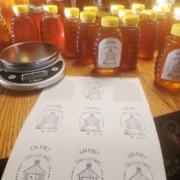
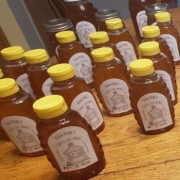
Could you use some?  I still have several jars of Love Led Farm raw honey that are available from our last harvest.

Recently, one customer bought a jar to help with her seasonal allergy issues.  I add mine to goat milk yogurt and spoon a little over fresh berries.  Like heaven in a dish!

I keep honey on our farm table next to the eggs.  If you don’t see the size you’d like, feel free to ask.

We still have a few jars of this golden harvest left–for you.

And Goats

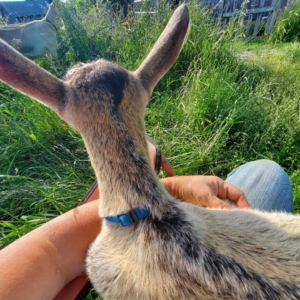
Nothing entertains me more than watching my 4 little goat kids leaping, running, and chasing one another around their pasture.  And when one crawls on my lap asking for a snuggle?  There are no words

Snuggling with Noah on a perfect summer evening

The milk their mamas are producing is so sweet and delicious–I think it’s the best they’ve ever given!  I still have room for another herd share member or two.  Interested?

Wondering if you would use 1/2 gallon each week?  What about making yogurt?  I can teach you how.  Yogurt freezes well so you’ll have plenty all winter long.  Versatile yogurt can be used as a substitute for sour cream.

Also, consider your pets.  I have found that adding goat milk to my dog’s diet helps her digestive system as well as improving her coat and skin.

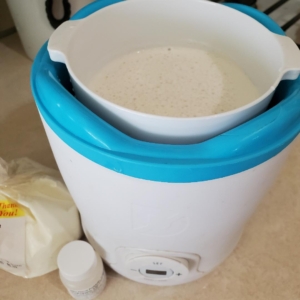
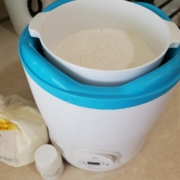
Goat milk yogurt ready to culture–a perfect way to use extra milk and preserve a wholesome source of dairy for winter.

Soak in this wonderful summer but don’t forget that colder temperatures will be back–sooner than most of us desire.  Perhaps it’s time for you to think about what will be in your freezer next winter.  We can help!

See you soon…on Love Led Farm!

Warmly,

A Growing List of Farm Products—For You

Goats

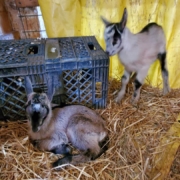
First, I just have to share another baby picture.  Recently, Kelly had her son and daughter.  Noah and Nancy are healthy and ready to romp.  They join Nellie and Nora who are now 4 weeks old.

Noah and Nancy

Notice the “N’s”?   My herd is registered with the American Dairy Goat Association.  Each year, we are given a letter of the alphabet for naming purposes.  In 2020, the letter was “M;” this year it is “N.”  You get the idea.

The goats are then tagged or tattooed with that letter and a birth order number which makes for easy tracking. That’s probably more goat information than you need to know but it is kind of interesting.

Anyway, with the birth of the babies comes Herd Share Season. I just enjoyed a glass of cold, sweet goat milk this morning….so good!

I have space for 3 or 4 more Love Led Farm Herd Share members…would that be you?

Goat milk yogurt ready to culture.

Pigs

Humans aren’t the only ones who drink goat milk around here.  It is an important part of our hogs’ diet.  This secret, learned from my brother-in-law years ago, is one reason why our pork is lean, tender, and beautifully pink.

Several previous customers have already reserved their meat for this year. But the good news is that we still have one hog available.  We sell by the quarter, half, or the whole.  You will pay a small deposit now and the rest is due after butchering this fall.

Don’t miss out!  If you want Love Led Farm pork for your freezer, now is the time to reserve.  Click on the pig on our home page to learn more and then contact me soon!

Pink Pigs

Meat Chickens

My first flocks of meat bird chicks have arrived and so have the Chicken Pick-up Dates.  Once again, you will have 3 choices of dates to pick up Cornish chickens (the white birds) and 2 choices for the Rangers (the slow growth birds).  To brush up on the differences between these two breeds, click on the chicken on our home page or choose “Order Meat Birds.”

**Please Note These Changes**

  • Our required deposit is now only $5 per bird!
  • All chickens will be priced at $3.50/pound…you will be able to choose the ones you want.

Chicken shortage? Not us!

Honey

I have added bottles of our own raw honey to the farm table.  Available in a variety of sizes, honey makes a wonderful gift for someone else…or for yourself.  Why not pick up a bottle or two when you stop for our eggs?

We still have plenty from our last honey harvest.

Eggs

Yes, eggs.  The must-have of Love Led Farm.  Do you know someone who struggles with chicken eggs?  Tell them that we have duck eggs, too.  Because of the difference in protein, many people find them easier to digest.

Duck and Chicken Eggs

As you can see, we have an ever-increasing variety of fine farm products to share with you, and we have no plans to stop.  In the very near future, we hope to introduce a line of breads and baked goods, many of which will be gluten-free. 

Have you visited Love Led Farm?  If not, it’s time.  Our convenient location and circular drive make an easy visit.  Until our new farm stand is finished, you will find a farm table by our garage.

Would you like to meet the babies?  Contact me and we will plan a meet and greet.

Find out why folks become more than our Love Led Farm customers.  They become our friends.

Warmly,

An Honest Discussion About Duck Eggs

Ducks on Parade

When Meg was young, we allowed her to raise a pair of ducks for the 4H fair.    In those days, it was illegal to sell small quantities of ducks at feed stores in our state (Massachusetts at the time), so I “met a guy in a parking lot” for the tradeoff.  I still laugh as I recall peeking around nervously while we made our deal:  a few dollars for a box containing 2 tiny ducklings.

Ducks have waddled in and out of our lives several times.  At Love Led Farm our egg business was booming and Arya needed a way of earning a few extra dollars.  I decided to reintroduce ducks into my plan.  A bit of income for a granddaughter, a farm clean-up team for me, an alternative type of eggs for my customers–a big win for everybody.

  Arya and the Duck

Now what about you?  Why would you even consider buying duck eggs vs. chicken eggs, especially when they are more expensive?  And don’t they taste “funny?”

As it turns out, there are several good reasons to consider the switch.  A difference in their protein structure means that folks who are allergic to chicken eggs can sometimes eat duck eggs.  Duck eggs are higher in many vital nutrients and as I will discuss in a minute, avid bakers treasure them.  Another bonus:  because their shells are thicker, duck eggs will stay fresh longer.

Interested in more detailed information?  Check out this duck/chicken egg comparison published by Mother Earth News a few years ago:  https://www.motherearthnews.com/real-food/the-proscons-of-eating-duck-eggs-vs-chicken-eggs-zbcz1705

Here are some of my own observations.

Size

When compared side by side, the difference in the two is obvious.  Although some duck eggs are the same size as a jumbo chicken egg, many are at least 1/3 bigger.

Duck or chicken egg? It’s pretty easy to tell.

Cooking

With lower water content, duck eggs can become rubbery if they are fried too long or are hard-boiled.   I often scramble ours with no appreciable difference.  For David, who likes his sunny side up, I just add a bit of water and cover them with a lid.  I have read that duck eggs are great for poaching because they won’t fall apart.

A double-yoke duck egg vs. a chicken egg

Baking with duck eggs is ideal.  In fact, bakery chefs prefer them.   To substitute for chicken eggs, use the smallest duck eggs you have.  That way you can use the same number of eggs as called for in your recipe.  Because a duck egg has more albumen than a chicken egg, you will find that your baked goods have more lift and structure–they will be lighter and fluffier.  And, you will notice a richness that no chicken egg can match.

When using larger eggs, remember that your duck egg is easily 1/3 larger than a chicken egg.  So it’s time for some mental math.  If a cake recipe requires three to six chicken eggs, use two or four duck eggs.  I have also found that it helps to add a little extra liquid as your recipe may seem a bit drier.

Beating duck egg whites will take longer because the gel is thicker.  But patience wins–it can be done.  Try bringing the whites to room temperature before beating.

Taste

Ducks thrive on protein.  Ours wander everywhere. They eat grass and weeds as they search for delicious bugs and critters that live in the soil.  This can alter the taste of their egg.  However, our ducks are supplemented with a daily portion of the same gmo-free feed that our chickens eat. This seems to balance the flavor.  We really don’t notice much difference between their eggs and our chickens’.

One other bonus:  due to that famous high protein, we stay full longer on fewer eggs.  Whether scrambled, in french toast, in a frittata or quiche, duck eggs are delicious!

Cholesterol

There is one important factor to consider before plunging into your first dozen duck eggs.  They are significantly higher  in cholesterol than chicken eggs–2 to 3 times higher than the recommended daily allowance.  This is something you will want to discuss with your health care provider.  If you are on a low cholesterol diet, you may want to limit your consumption of duck eggs.


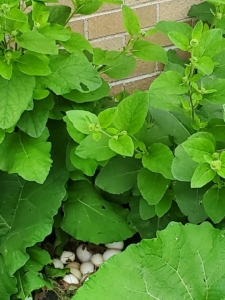
Freshly rinsed duck eggs because ducks love to bury them in the dirt.

Are you curious but not ready for a full dozen?  Try a duck egg half pak.  We now stock them in our convenient Customer Fridge.

Gmo-free duck eggs and chicken eggs are just two of the many fine products that we have available for you on Love Led Farm.  We specialize in pure, honest food for you and your family.  Hope to see you soon!
Warmly,

Eggonomics 101

I suppose I was like most Americans.  When we needed eggs, day or night, summer or winter, I made a trip to the glass-covered refrigerator near the back of my grocery store.  I didn’t think much about how those eggs got there in the first place.  Nor did I worry about their availability.  Then we bought our first chickens and I learned a few things.

Did you know?

-Unless chicks are desired, hens do not need a rooster to lay eggs.  God just created them to do their job…lay eggs.

-Hens do not lay an egg every day…their bodies simply are not designed to produce 365 eggs.  Even if they could, creating an egg is about a 26-hour process.

-For most birds, production is highest in spring and fall.  Heat, cold, and strange weather patterns throw them off course and can cause them to stop laying altogether.

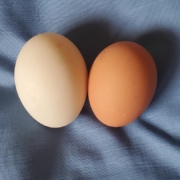
It’s easy to understand why large egg producers turn to automated, highly controlled systems to provide American consumers with the vast quantities of eggs that are consumed.  For those who prefer local eggs from a smaller farm this may also help you understand why your farmer may simply say, “Sorry, I have no eggs today.”

On Love Led Farm, we are entering our notorious summer “eggonomic slowdown.”  There are days when David and I sternly ask our hens, “Girls, where are the eggs?”  But although it is easy for us to grow impatient with our feathered friends, we are learning to adopt a more patient, understanding attitude.

For in nature, things work best when they are allowed to follow the plan designed for them.  And maybe when we do have the pleasure of eating a delicious free-range egg, we will more deeply appreciate what it took to appear on our plate.
Meanwhile…

Our meat birds are looking mighty fine!  Our second flock of 100 chicks will arrive next week, and we will order the third flock next month.  If you haven’t placed your orders, you will want to get hopping.  Summer is flying by–don’t miss your chance to fill your freezer with our famous, Love Led Farm chicken.

Warmly,

Dying Brown Eggs

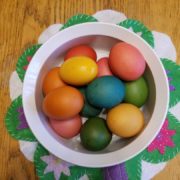
Will I ever outgrow the fun of coloring Easter eggs?  Not as long as I have family around.  Even after the girls left home, one or more of them would gather around the table a few days before Easter to plunge 2 dozen boiled white eggs into a rainbow of colors.  White eggs?

The breeds of hens that I raise lay brown eggs.  And  like most people, I assumed that dying them would be a problem.  So each year, I have dutifully made my way to the supermarket’s egg display to buy my sale-priced, 2 dozen, white eggs while my hens produced dozens of beautiful eggs–mine for the taking.  Not this year.

I recently read an article on dying brown eggs and decided to give it a try.  I purchased the same cheap dye kit that we have always used and hard boiled the eggs just like always.

Here are the results.

Are you surprised?  Me too!  The colors are actually more vibrant and have a beautiful sheen.  Thinking that brown eggs might need a longer soaking time to absorb the color, I left the first 6 in the color cups for about 5 minutes; the second 6 for only 2 or 3 minutes.  There was no noticeable difference.

As my husband admired the eggs, he asked the question that is on all of our minds:  “So with white eggs being less than a dollar and brown eggs being $3.50, why would anybody want to spend the money to dye them?”   And, if all they will be used for is an egg hunt, okay, I might agree.

But I want to eat these eggs, while maintaining our healthy food choices. Deviled eggs, egg salad, dipped in a bit of salt, we love hard-boiled eggs.   Yes, I want to be able to have my colored egg and eat it, too!  This year I have learned that I don’t have to compromise which makes me feel pretty good about serving them to those I love.

Happy Easter, Everybody!  Remember…the holiday isn’t about a bunny.  It’s about a Lamb.


Frozen Eggs

Ah Winter!

On one particularly cold January night, the egg basket sat forgotten in our garage.  The result?  Frozen eggcycles.  Rather than toss almost 3 dozen eggs that could not be sold, I decided to experiment.  Would they be any good?  Could I use them as usual?

Any eggs with large cracks were discarded as I saw no need to invite unwelcome bacteria into our bodies.  Those without cracks were divided into two groups.  The first were rinsed and stored in a carton in the refrigerator where, after many days, they finally thawed.

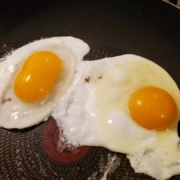
One morning, in an impatient mood, I thought I would try frying a couple.  After all, the dog, the cat,  and I wanted to eat eggs.  The finished product?

As the whites still contained plenty of ice crystals, they took longer than normal to cook.  The key seemed to be “Low and Slow.”  But as you can see, the end results were just fine.

The remaining eggs were placed in a basket where they sat at room temperature.  Although I removed all traces of dirt, I did not soak them.  This allowed their protective waterproof layer to remain intact.  Thawing, was of course, much quicker and once thawed, the eggs were just…eggs.  I cooked and baked with them with no noticeable differences.

So why would you purposefully want to freeze eggs?  Maybe you found a great deal on them and want to load up.  Perhaps you will be traveling and want to store the contents of your refrigerator until you return.  Maybe you want to take some on your camping trip without the mess of broken eggshells.  Or, perhaps you are food prepping and would like to freeze eggs in small portions for favorite recipes.

The American Egg Board has compiled an online, alphabetical encyclopedia about eggs.  Searching though it, you will find all you could ever wish to know, including how to freeze them.   Apparently, eggs can be successful frozen for up to a year.  However, because they do expand their contents when frozen, it is better to crack them open and pour the contents into freezer containers.  Here are some tips that they offer:

*Freeze only clean, fresh eggs and always label with the date you prepared them.

*For Egg Whites:  Separate the eggs one at a time, pour into freezer containers or into empty ice cube trays.  If you choose the latter, just empty each frozen compartment into a larger container and label.

*For Yolks:  It is a property of eggs yolks to gel when frozen, making them difficult to use in a recipe.  To help retard this this thickening, beat in 1 1/2 tsp. of sugar or 1/8 tsp. of salt per 1/4 cup of egg yolk (about 4 yolks).  Then freeze in a container and label.

*Whole Eggs:  Beat until blended.  Pour into containers, or again, ice cube trays.  Label with the number of eggs you have prepared and freeze.

To Thaw Frozen Eggs:  Place containers of frozen eggs in the refrigerator overnight to thaw (I haven’t tried this but I assume they thaw more quickly without their shells) or under running water.  Egg whites will beat better if you then allow them to sit at room temperature for about 30 minutes.

Frozen or not, what other questions might you have about eggs?  Check out the website of the American Egg Board for answers:  https://www.incredibleegg.org.  Then contact me for fresh–not frozen–non-gmo, free-range eggs.

Creating your best dishes, starts with the best ingredients.

Robin—Love Led Farm